Nuremberg/Munich – Day 3 of a 10-Day Trip in Europe
Day 3 was off to a new city – Munich, the largest city in the German state of Bavaria. It is also the third largest city in Germany, after Berlin and Hamburg. It is home to many museums and historical buildings, and is also a good base for day trips from Munich.
Day 3
Nuremberg/Munich
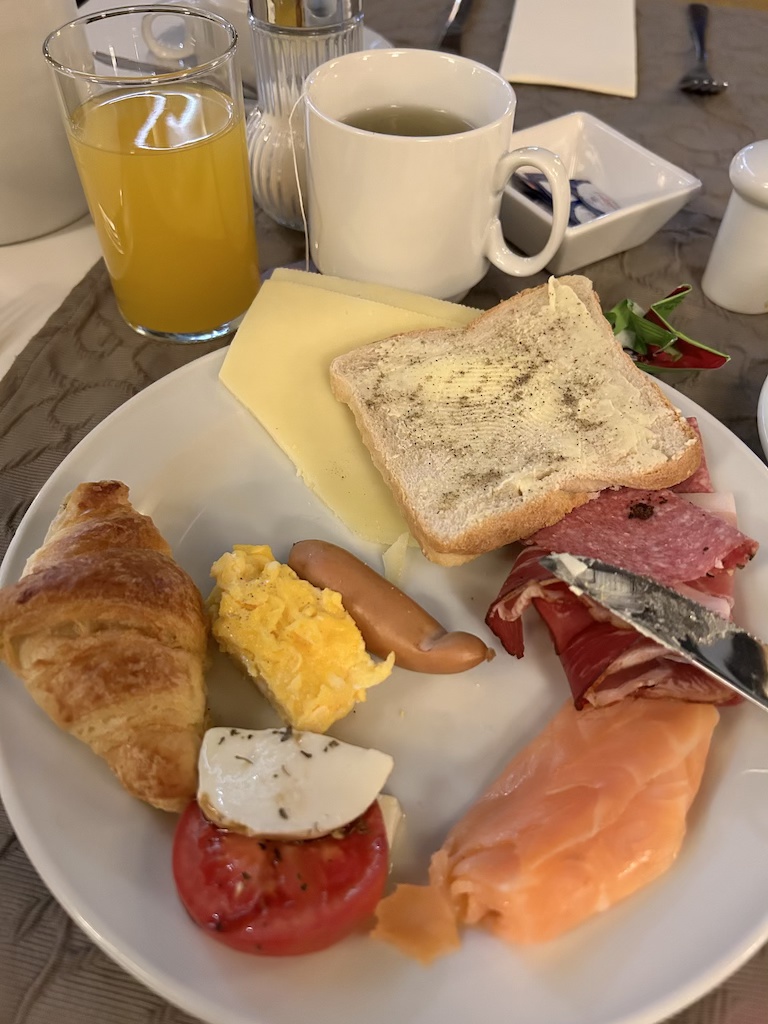
The hotel I stayed at had breakfast included, so I headed down for breakfast around 6am. The selection was good with a variety of pastries, deli meat and cheese. The time was great as they just opened for breakfast and there was no one else other than staff at that point in time. I had a short discussion with one of the employees – we talked about Canada and how he wanted to visit, as well as how lovely Nuremberg is during the holiday season.
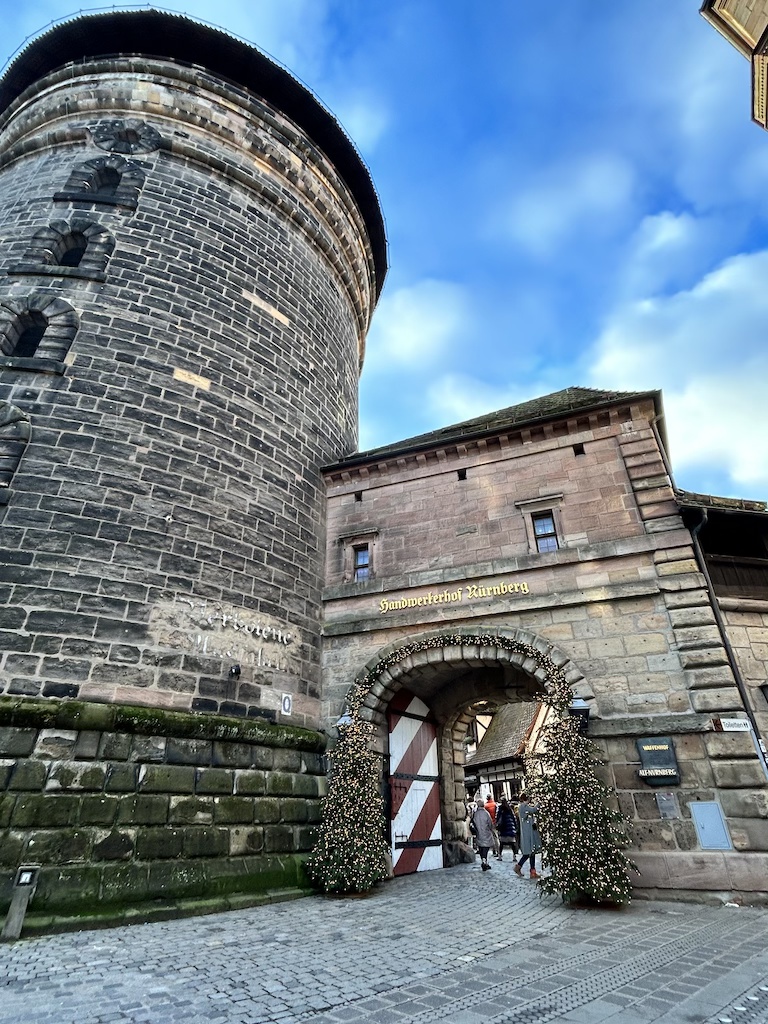
After breakfast, I packed my bags and started my walk to the Nuremberg Main Station. On the way, I walked past a medieval shopping area called Handwerkerhof Nuremberg, where you can find boutique shops and restaurants. It was too early for anything to be open, but this would have been a cute spot to visit in the afternoon.

I booked my train from Nuremberg to Munich online using the Deutsche Bahn website. The train ride is about an hour and fifteen minutes long. There is the option of reserving a seat at an additional price, else you will need to look for an unbooked seat once on the train. There are electronic seat numbers above each seat and it will show if and what leg of the trip the seat is booked for. If your stop is the first stop of the train that day, it may not show yet if the seat is booked. This information will show up about 10 minutes before the train’s departure. I did not reserve my seat and had no issues.
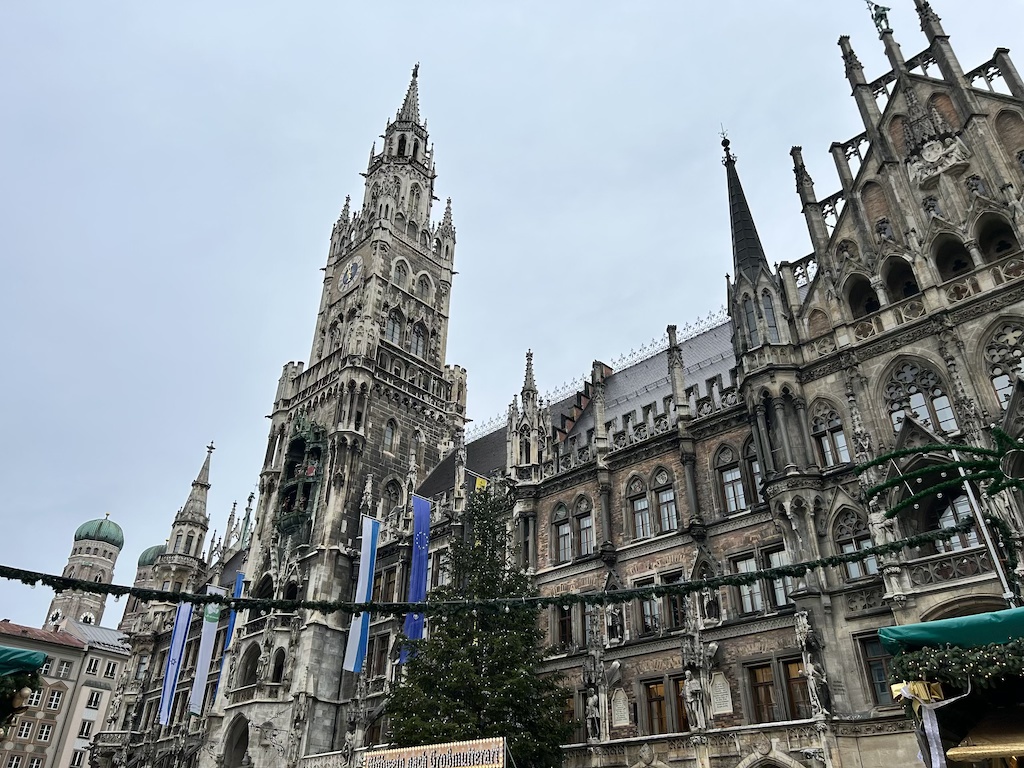
The trip between Nuremberg and Munich is pretty flat and there isn’t really anything exciting. Once in Munich, I headed to the Tourist Office near the Munich Central Station (Hauptbahnhof) and purchased the 2-Day Munich Card Pass, which offers free transit and discounts to attractions. I had wanted to purchase the Munich City Pass, which is more expensive, but it gives full access to certain attractions in Munich instead of just discounts. I think this ended up working in my favour as I did not try to squeeze as much as I could into my days, but instead took more time to appreciate the attractions that I did visit. Overall, the pass that you select will depend on what you want to see during your stay in Munich. I then walked to my hotel, the King’s Hotel Center, which was only a few minutes away from the Tourist Office to drop off my bags. Next, I took the city train to Marienplatz – the main plaza at the Munich centre where the Neues Rathaus (City Hall) is located. Neues Rathaus is a Neo-Gothic building that started construction in 1867 and completed in 1908. The building is very elaborate and just gorgeous to look at. From the base of the building, you can see the Rathaus-Glockenspiel, which is a mechanical clock with life-sized figures that turns twice a day – 11am and 12pm (and also 5pm March to September). The life-sized figures re-enact two stories – the marriage of Duke Wilhelm V to Renata of Lorraine in 1568 and the story of Schäfflerstanz, a traditional German dance. Each re-enactment takes about 15 minutes.
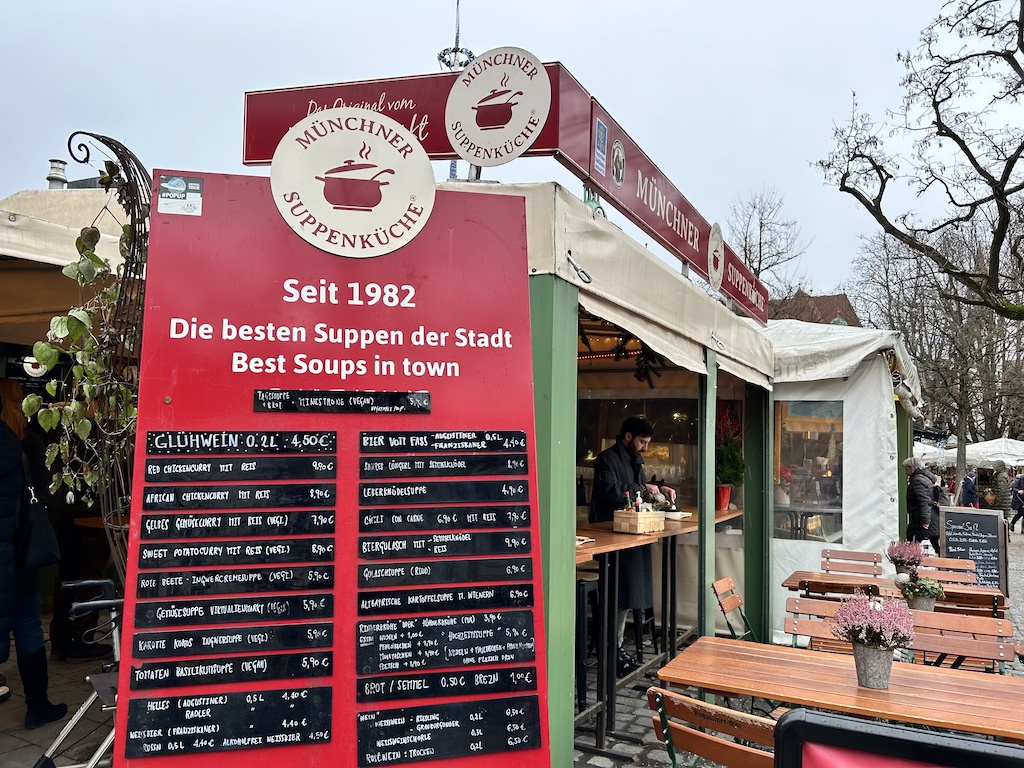
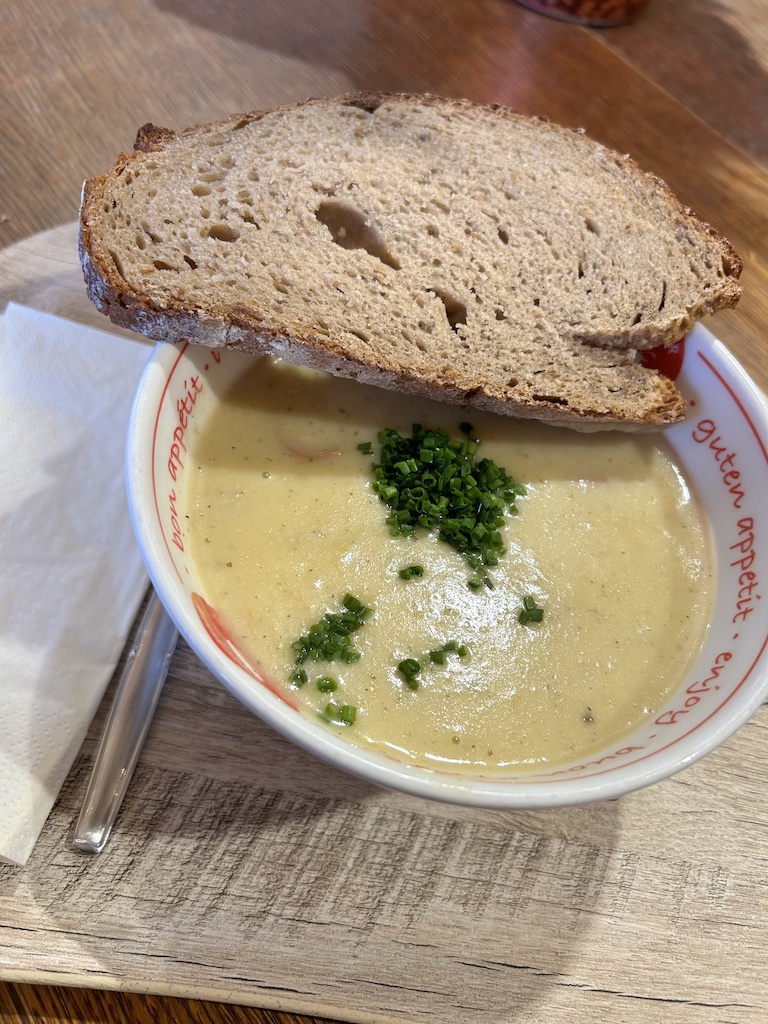
Marienplatz was also quite busy due to the Christmas Market. I was headed to Viktualienmarkt, the outdoor Farmer’s Market nearby and in particular Münchner Suppenküche, a soup restaurant. It was raining, so what better way to warm up than to have soup. During the summers, there is a beer garden at Viktualienmarkt, which I’m sure is a popular destination for locals and tourists. Münchner Suppenküche is outdoors but covered and has lots of soup options to pick from. I wanted something classic Bavarian so I ordered the Altbayerische Kartoffelsuppe (Old Bavarian Potato Soup).
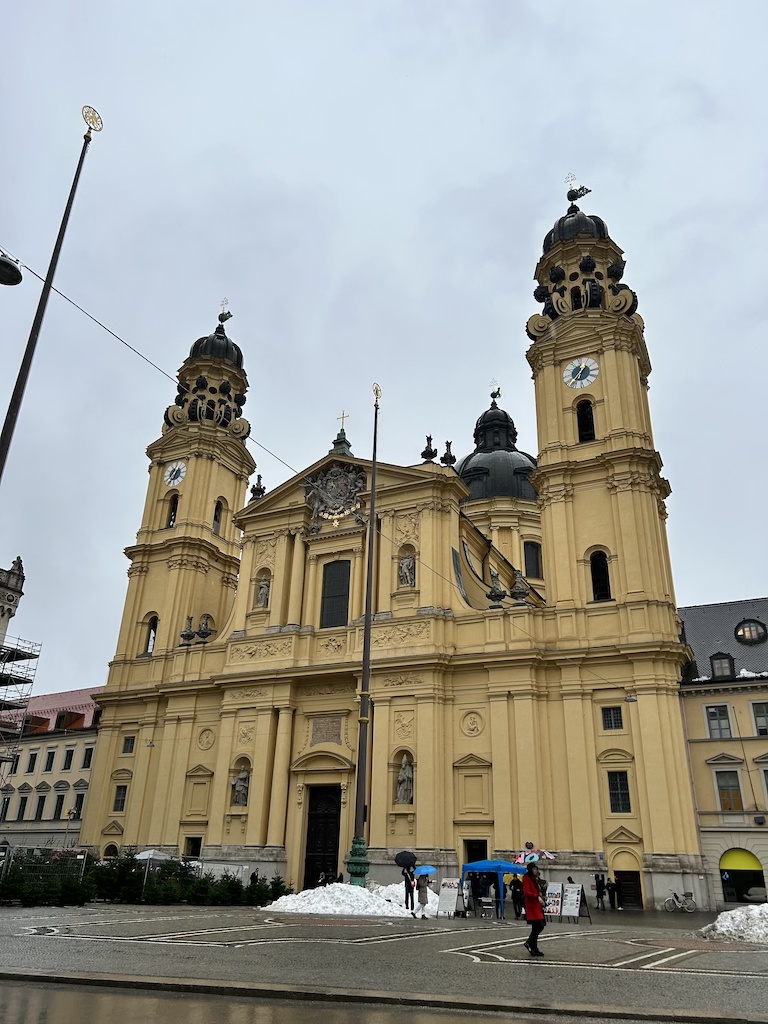
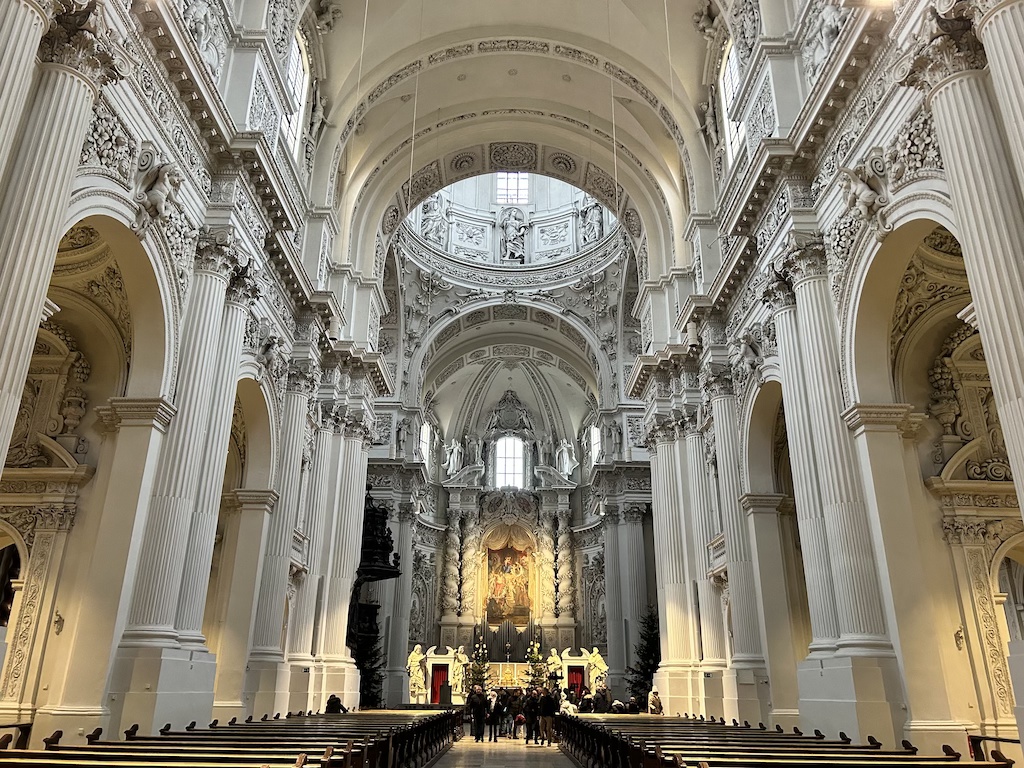
Next, I took the train to Theatine Church, a Catholic Church painted in a dark yellow that was built from 1663 to 1690. Visiting the church is free. The interior of the church is designed in an Italian Barocque style with white arches and high ceiling domes. I’m always amazed at the amount of detail of European churches.
I then walked to the Munich Residenz Palace (accidentally as I wanted to go to the museum). Google Maps is misleading in giving directions between the Theatine Church and Munich Residenz Palace. It shows that the Munich Residenz Palace is only a minute walk away, which in theory may be true, but the entrance to the Palace is about a five minute walk away in the opposite direction of Google Maps. Instead of Munich Residenz Palace, google Residenzmuseum as it leads to the entrance to the museum. Here are photos to compare the two locations!
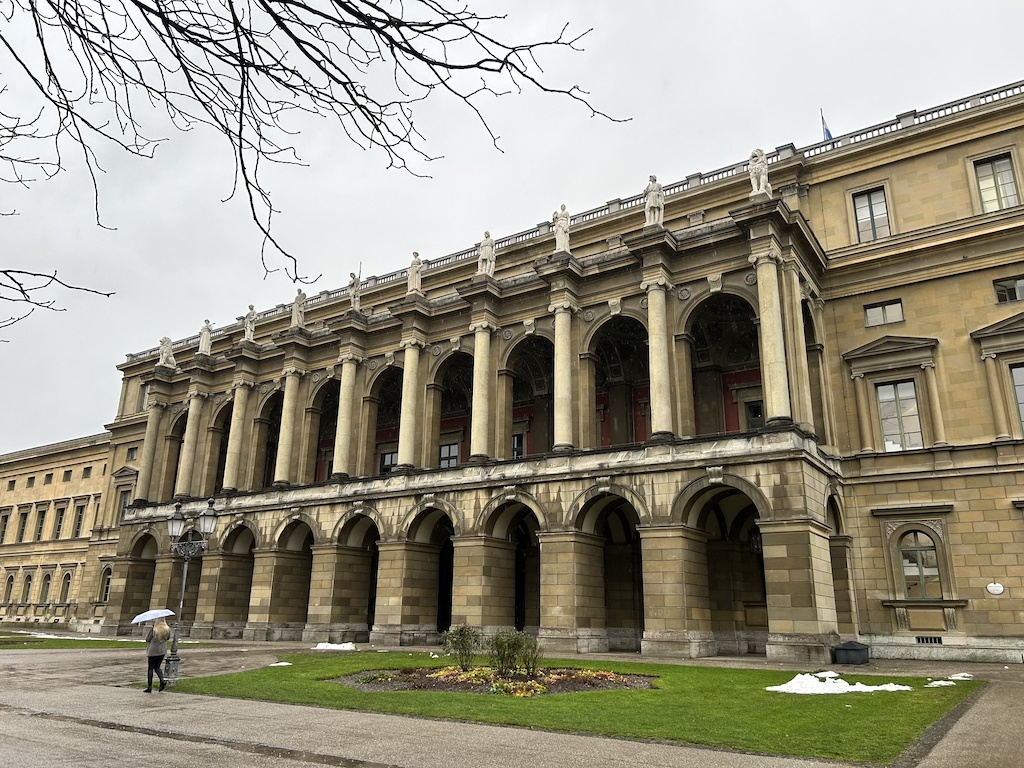
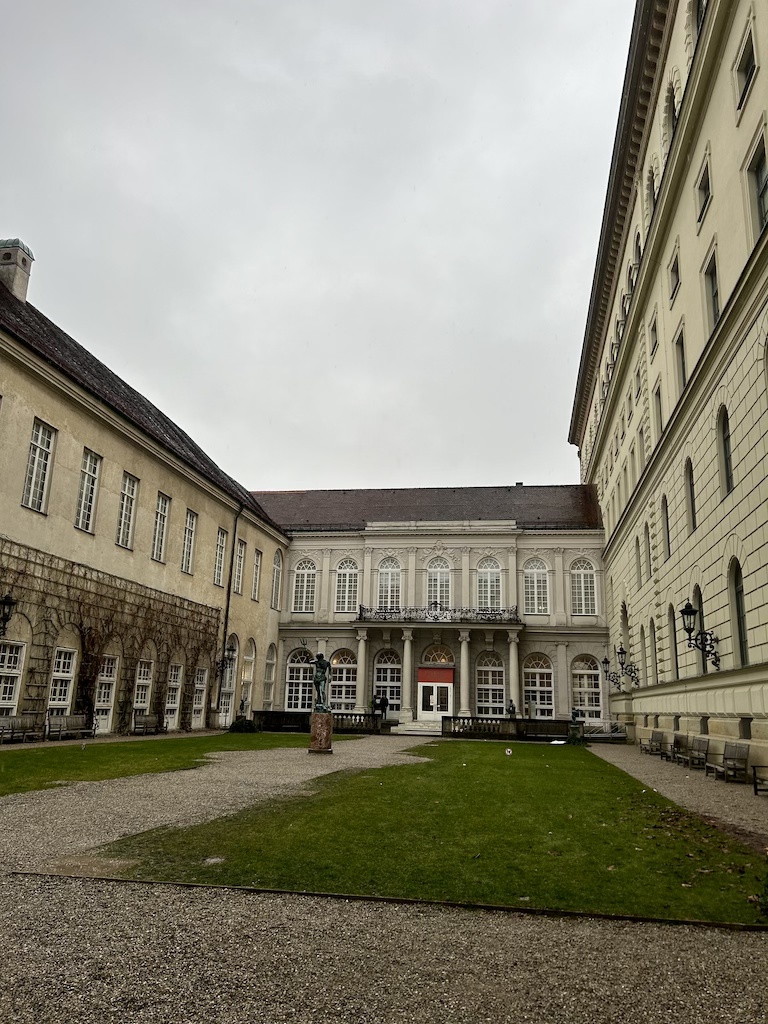
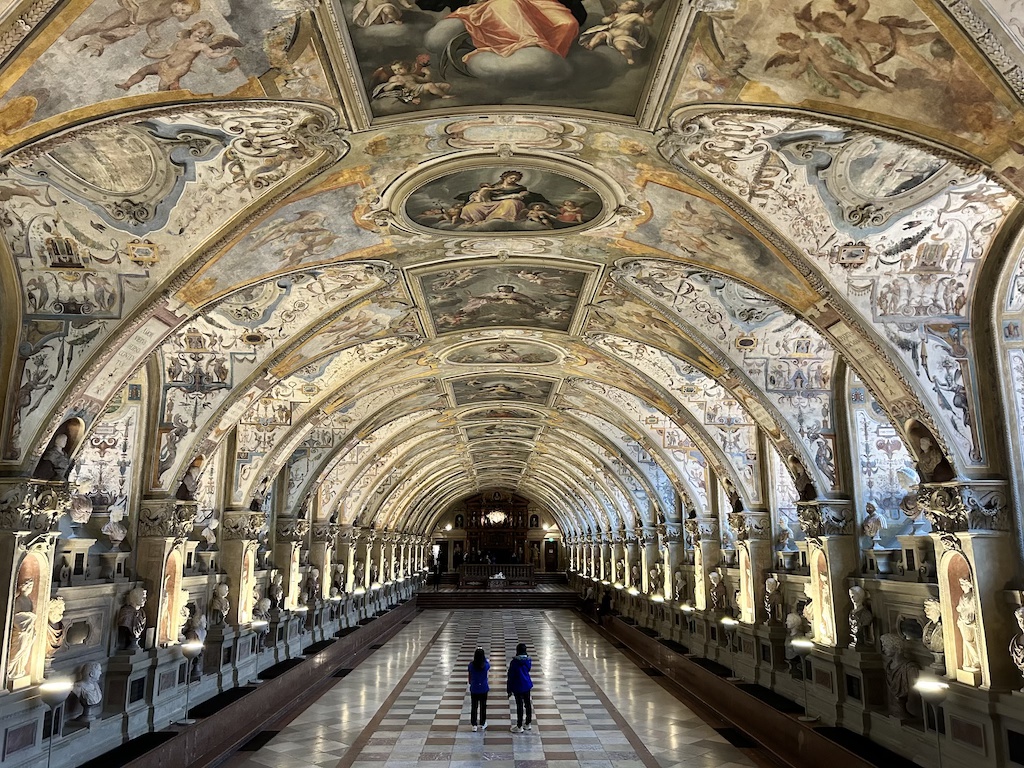
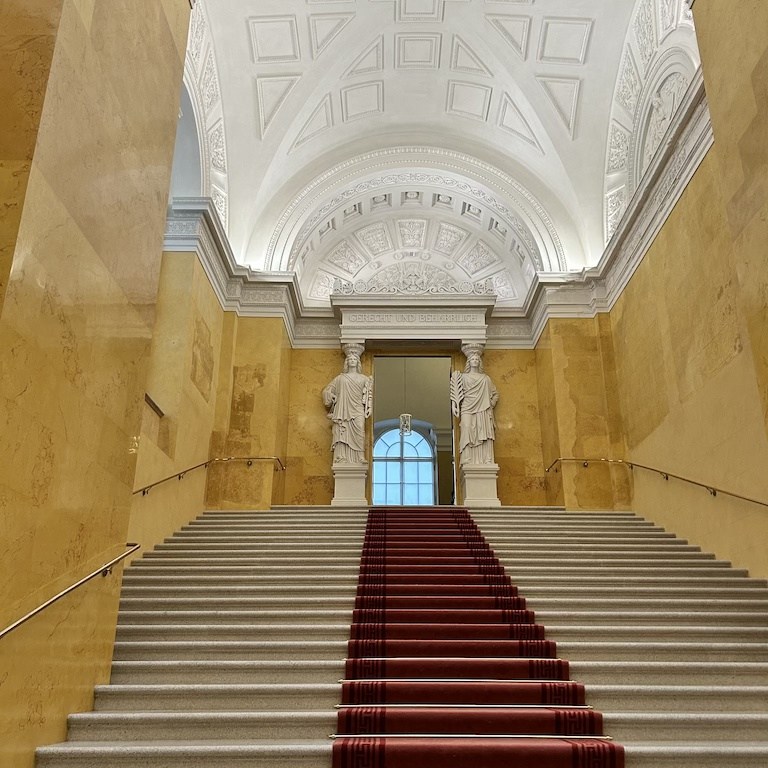
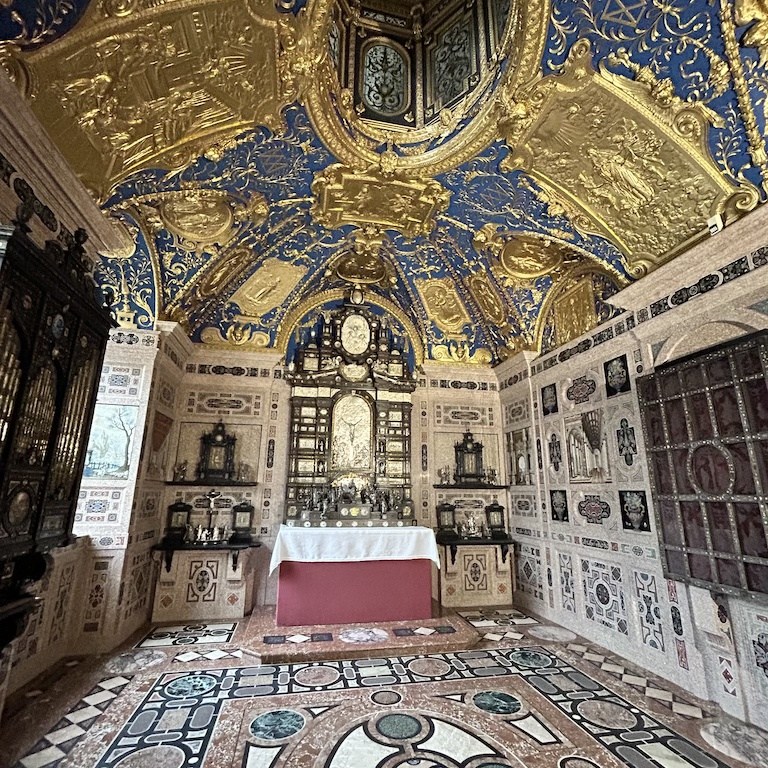
The Munich Residenz Palace was once the home of the House of Wittelsbach, the monarchs of Bavaria between 1805 to 1915. However, the history of the palace dates to earlier than that – it was built in the 14th century and has been the home of many rulers. There are multiple levels of admission costs – I got the basic ticket which allows you to wander around the Palace. There are lots of different rooms to explore and paintings to admire. My favourite room was the Antiquarium (Hall of Antiquities), a 66m long hall filled to the brim with intricate art.

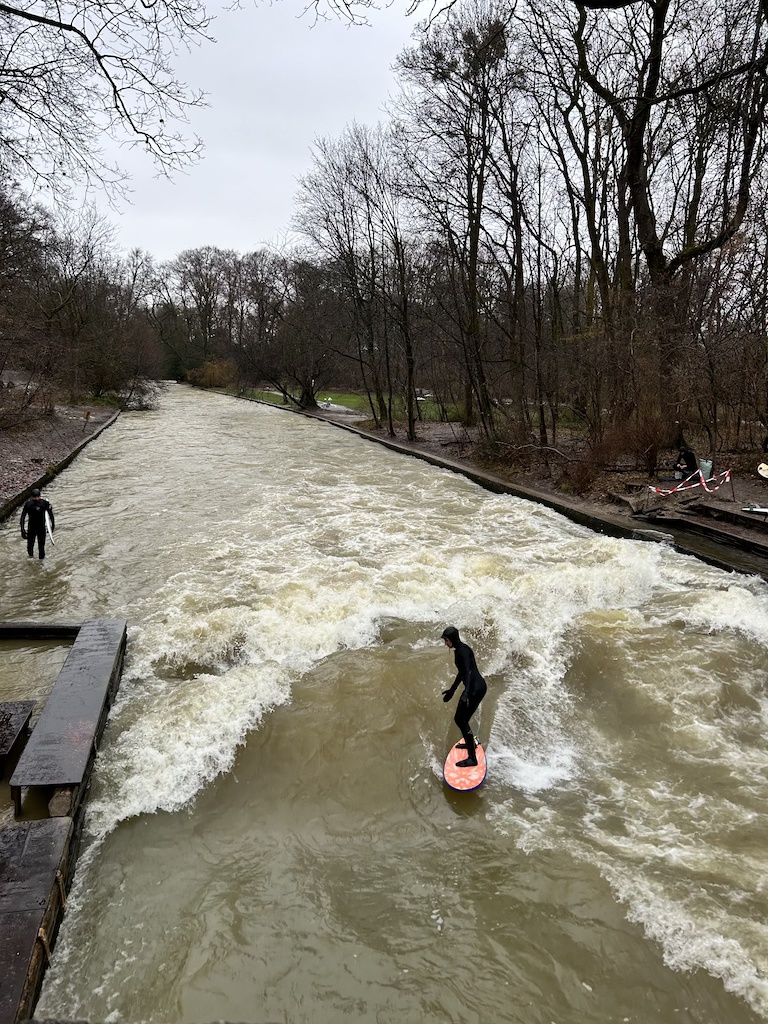
About a 10 minute walk from the Residenzmuseum is Eisbachwelle, which is near the entrance to the Englische Garten. Eisbachwelle is a popular spot for surfers as the river generates waves perfect for the sport. It is fun to watch the surfers brave the waves. The Englische Garten is a large public park (417 hectares) and is very popular during the warmer seasons especially due to the beer garden near the Chinese Tower. It was rainy and dreary, so not as exciting unless you like muddy pathways.
About a 5 minute walk from Eisbachwelle is the Bavarian National Museum. This museum is filled with artifacts; mainly decorative art such as paintings, sculptures, and tapestry (and much more).
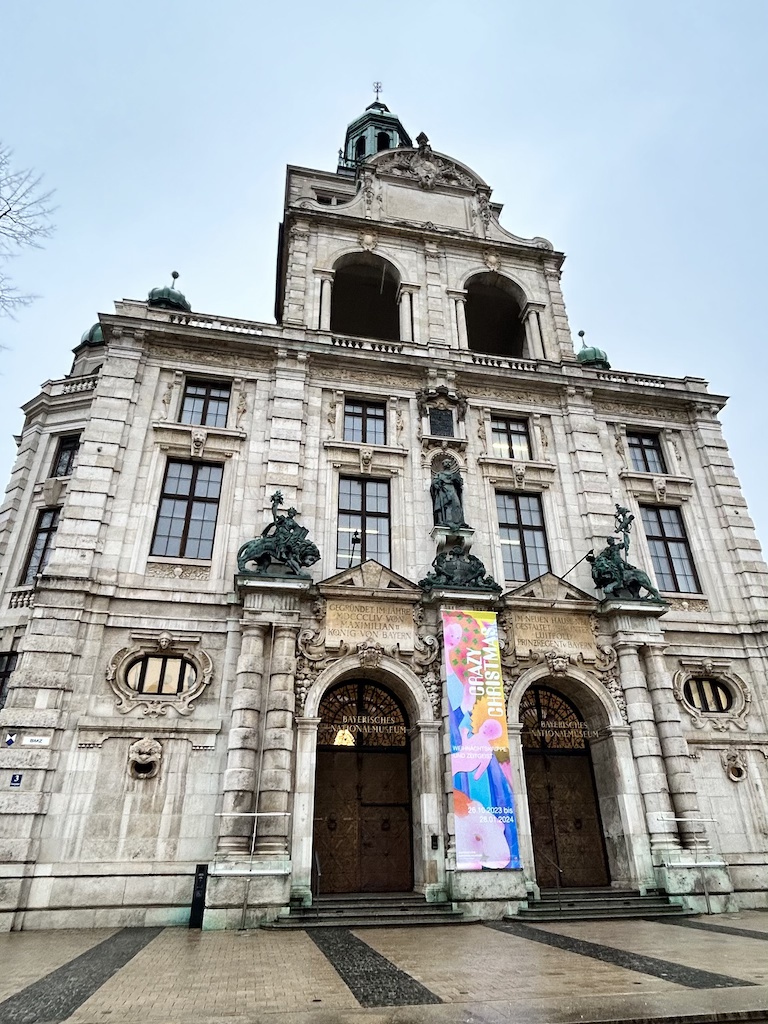
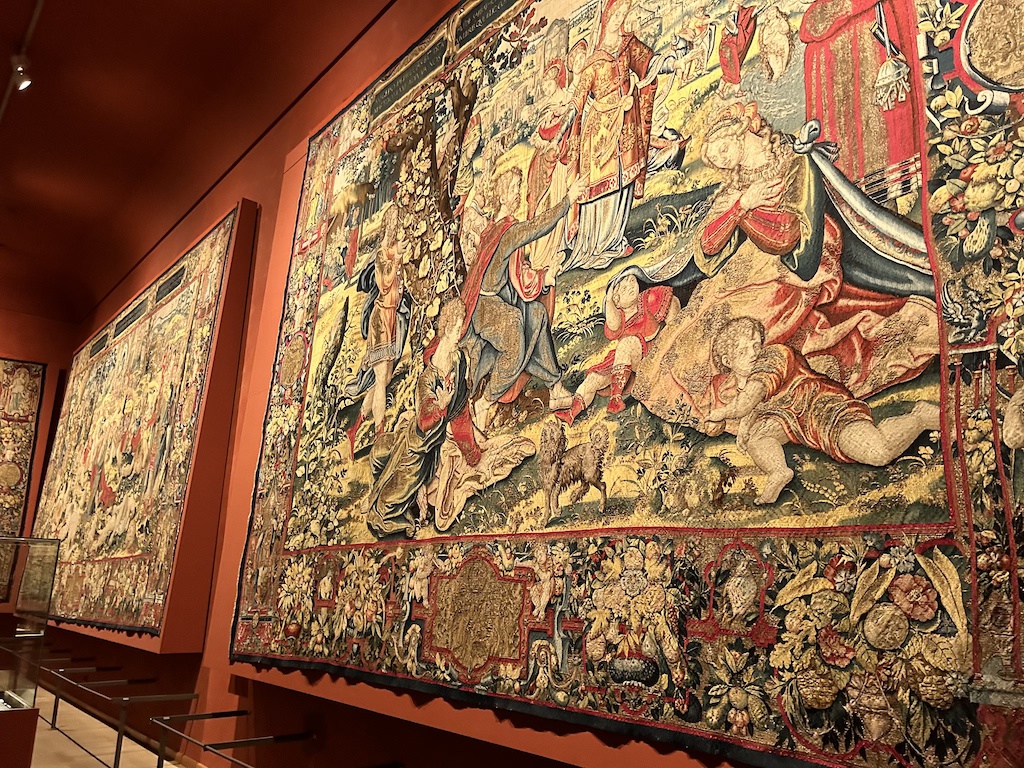
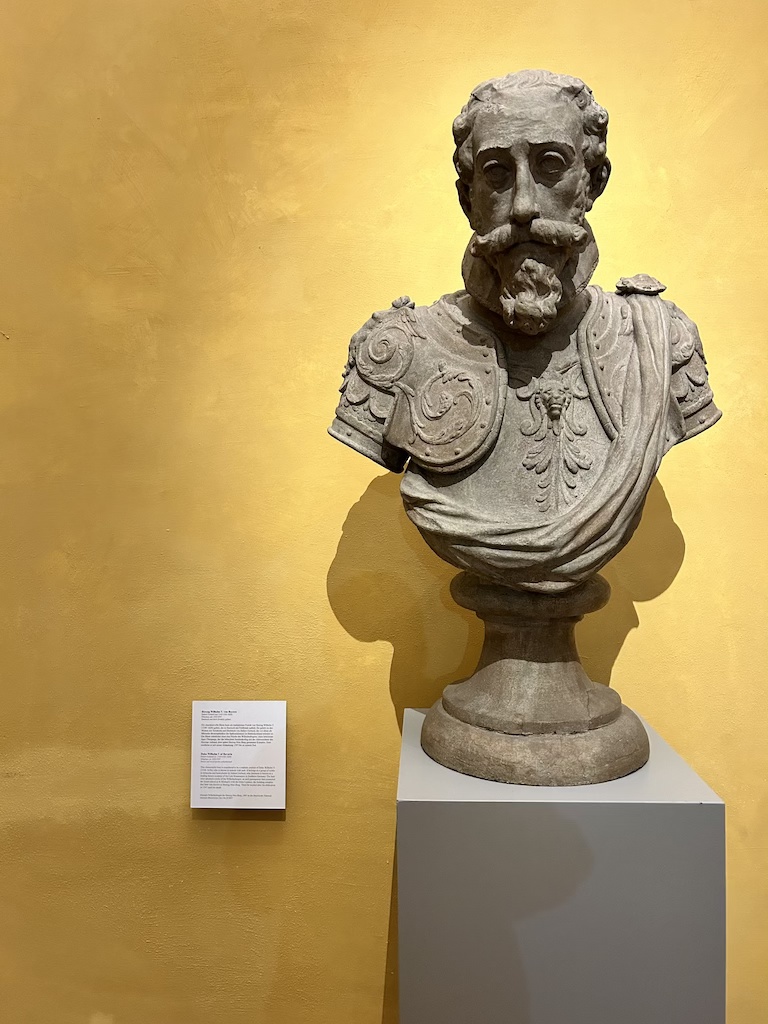
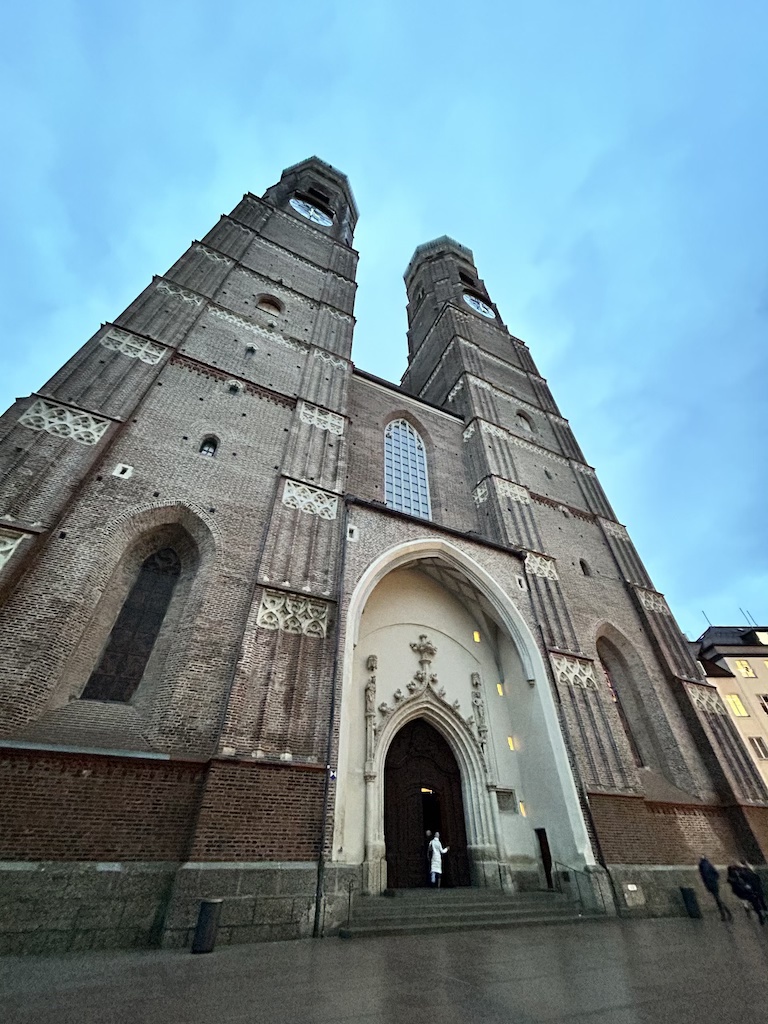
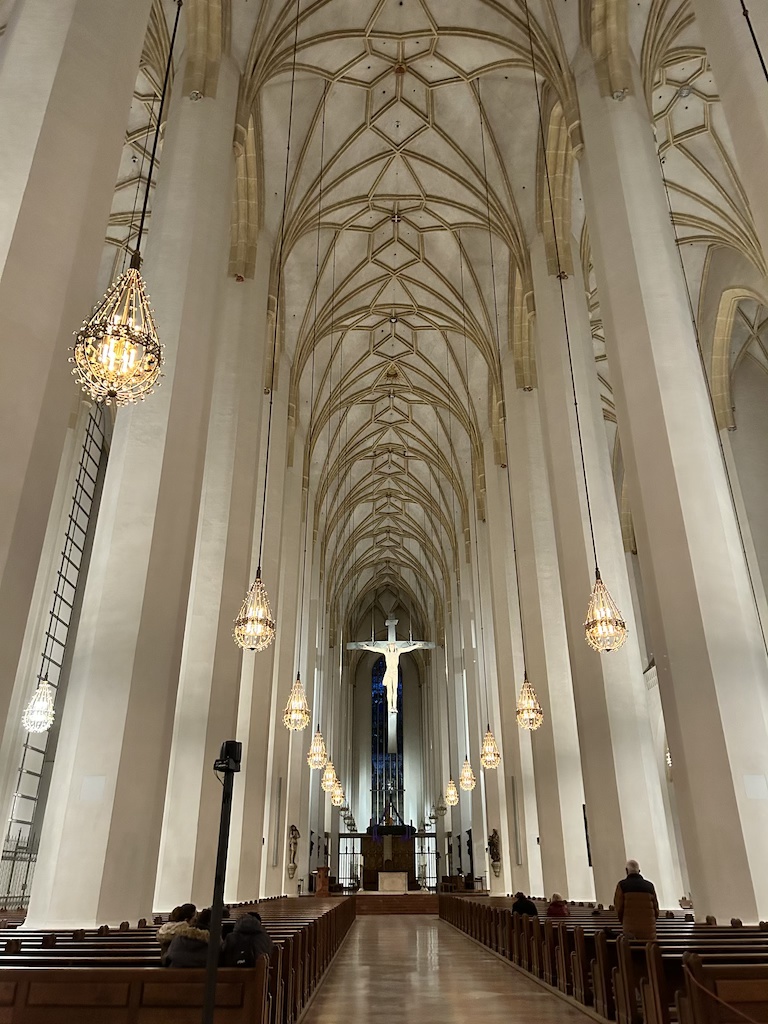
Afterwards, I travelled back to the Marienplatz station and walked to Frauenkirche (English name is Church of our Lady). Frauenkirche is a Catholic church built in 1488 and consecrated in 1494. It has the same name as the Catholic church in Nuremberg, although this might just be chance as I was not able to find any information on why the two church names are identical.
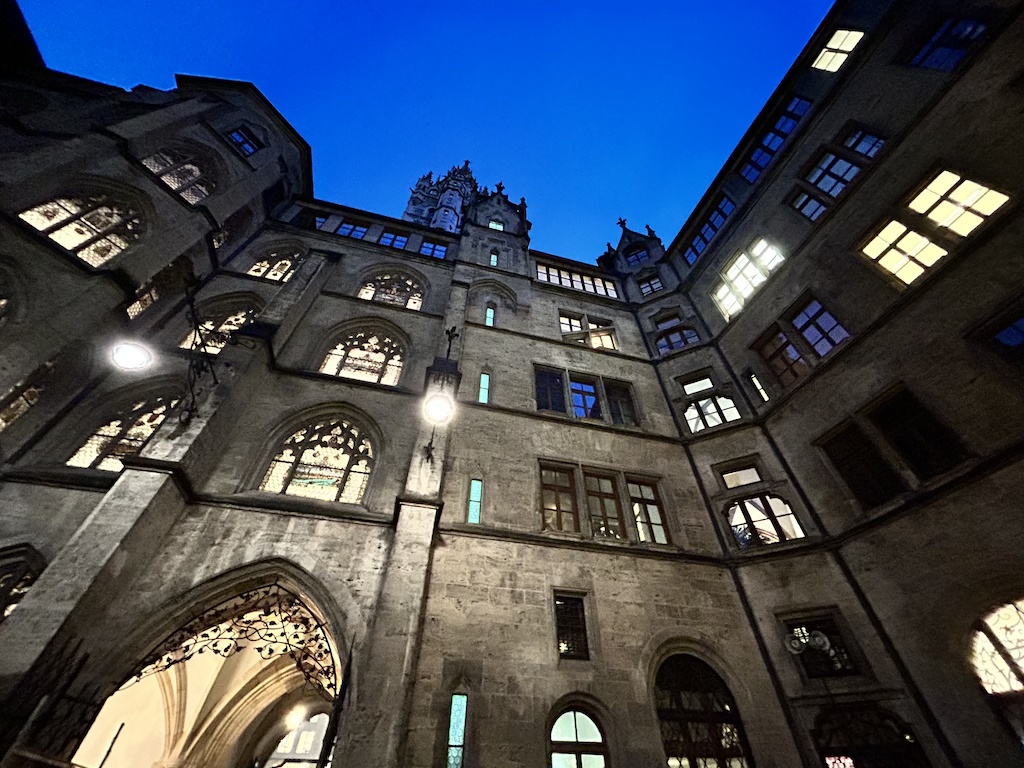
I then wandered around the Christmas Market at Marienplatz, including entering the courtyard within the Neues Rathaus. It is important to note that if you are looking at collecting Christmas Market mugs, there are different designs depending on which market and which booth at that market you go to.
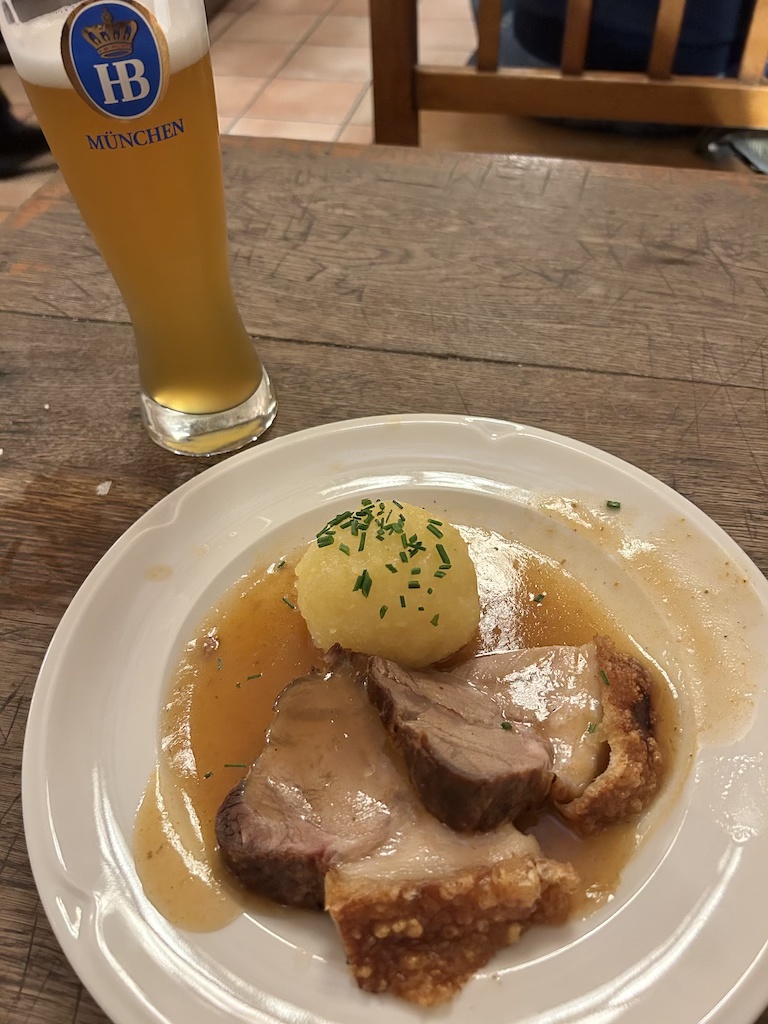
For dinner, I walked to the Hofbrauhaus Munchen, a 3-floor beer hall with space for over 1500 people. The beer hall serves food and 1L mugs of beer. The Hofbrauhaus Munchen is the city’s most famous beerhall and it has been around since 1589. For those who have seen the videos of servers carrying 14-16 1L-mugs of beer to tables, this is exactly the place to see it in real life (if you haven’t, definitely look it up online – it’s pretty cool). There are greeters at the door who can help you find a table, but no one will stop you if you try to seat yourself. Most people also don’t mind sharing tables if there is room at the table. Every table was occupied during my visit, but I spotted space at a table with another couple so I sat down. Not only was this beer hall extremely busy, it was surprisingly organized. I was handed a menu almost immediately after sitting down and they took my order shortly after. I ordered the roast pork crackling (Krustenschweinebraten) and their wheat beer, Münchner Weisse, which only came as a pint. The Krustenschweinebraten came with a potato dumpling and was covered in gravy. The dish was good and reminded me of Chinese crispy roasted pork belly, but there was a very thick layer of fat that I could not finish. The potato dumpling was gooey and soft, which I really liked.
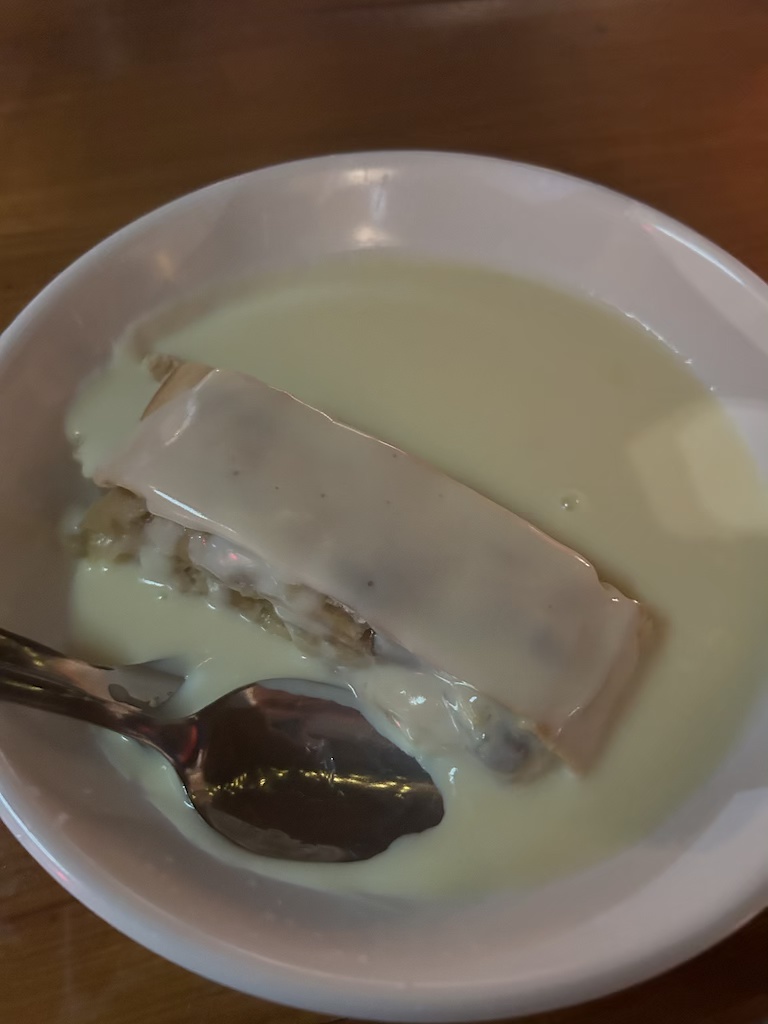
For dessert, I stopped at a stall at the Marienplatz Christmas market for apple strudel. I paid a little extra for the warm vanilla cream sauce, which I do not regret. The vanilla cream sauce is one of the most delicious things I have ever had – it was thick, sweet, and so tasty. I cannot recommend it more.
Complete Day 3 Itinerary
*Travel times may vary. Check Google Maps for most accurate travel details.
9:00am: Travel to Munich (1 hour and 15 minutes train from Nuremberg Central Station). Pick up your travel pass from the Tourist Office near the Munich Central Station.
11:00am: Visit Viktualienmarkt, the Farmer’s Market (6 minute transit from Munich Central Station). Wander the market.
12:00pm: Have soup for lunch at Münchner Suppenküche (1 minute walk from Viktualienmarkt).
1:00pm: Visit Theatine Church (7 minute transit from Münchner Suppenküche). Then continue to the Residenzmuseum (2 minute walk from Theatine Church).
3:00pm: Visit the Bavarian National Museum (18 minute walk from Residenzmuseum). Pass by the Englische Garten on the way. Stop to admire the surfers at Eisbachwelle. If the weather is good and it is the right time of the year, consider making time for the beer garden at the Chinese Tower.
5:00pm: Head back to the Old Town area (17 minute transit from the Bavarian National Museum). Visit the Frauenkirche and Neues Rathaus. Admire the Rathaus-Glockenspiel.
6:00pm: Have dinner and beer at Hofbrauhaus Munchen (2 minute walk from Neues Rathaus). Have apple strudel with vanilla cream sauce for dessert.
10-Day Europe Itinerary
Click “Download” below for an excel version of my 10-Day Europe Itinerary to Czech Republic, Germany, and Austria. Feel free to use the excel file as a planning template for your own trip!
Germany Links:


 Travels with Carolyne